What makes a great coffee experience unforgettable?
Imagine being served two beautifully prepared cups of coffee.
Both taste excellent. Both have been prepared with precision. Both showcase the skill of the barista.
But one experience stays with you long after the cup is empty.
Why?
Perhaps the barista helped you understand where the coffee came from. Perhaps they explained how the roasting process shaped its flavour. Or perhaps they shared a story that changed how you thought about the people, place and work behind your cup.
That is the power of storytelling.
In specialty coffee, technical skill can earn attention. A compelling story can give that skill meaning.
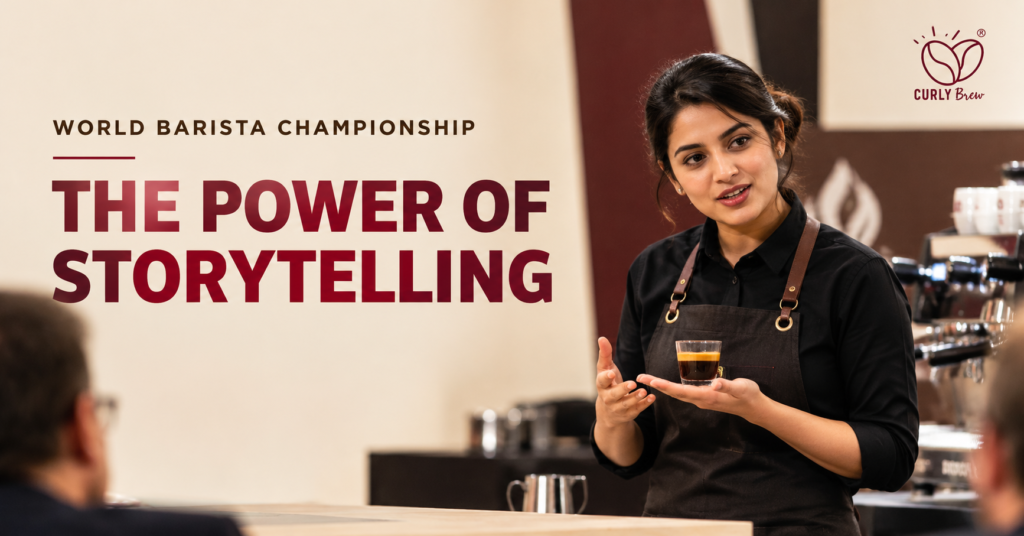
And few stages bring these elements together quite like the World Barista Championship (WBC).
The World Barista Championship: 15 minutes to make an impression
The World Barista Championship is one of specialty coffee’s most prominent international competitions. It brings together national champions from around the world to demonstrate their skill, creativity and understanding of coffee.
The 2026 championship is taking place in Panama City from October 22 to 25, as part of World of Coffee Panama. More than 50 national champions are participating in this year’s event. Source: World Coffee Championships
The format is demanding.
Each competitor has 15 minutes to prepare and serve 12 drinks to a panel of sensory judges:
- Four espressos
- Four milk-based beverages
- Four signature beverages
The drinks are evaluated alongside elements such as taste, technical proficiency, cleanliness, creativity and presentation. Source: 2026 World Barista Championship overview
Think about what that involves. Every movement matters. Every recipe needs to be carefully considered. The coffee must speak for itself, while the barista must communicate the thinking behind it—all within a tightly controlled timeframe.
It is a test of much more than making a good cup of coffee.
It is also a test of how effectively a competitor can bring their ideas to life.
Why Storytelling Matters in Coffee
Every cup has a story—from the people who grow the beans to the way they are roasted and brewed.
Storytelling connects consumers to this journey. It helps baristas explain flavours, roasters share their craft, and coffee brands build meaningful connections with their audience.
Great storytelling doesn’t replace coffee quality. It helps people understand and appreciate it. In a competition, skill and taste remain essential, but a clear, compelling explanation can make a great coffee experience more memorable.
Three things a barista’s presentation needs
1. The coffee: knowledge beyond tasting notes
Words such as chocolatey, floral, fruity and caramel-like are familiar in specialty coffee. They help describe flavour, but they are only the beginning.
A thoughtful presentation can explain why a coffee tastes the way it does. What is distinctive about its origin or processing? How has the roast been developed to complement its characteristics? What should the person tasting it pay attention to?
The aim is not to overwhelm the audience with technical vocabulary.
It is to make coffee knowledge accessible.
A detailed explanation may impress a fellow coffee professional, but a clear explanation that helps the listener taste something new can be even more effective.
2. The craft: making the invisible visible
Much of a barista’s work happens before the cup reaches the table.
There are decisions about grind size, extraction, water, temperature, milk texture and recipe development. Small adjustments can influence the final sensory experience.
The audience may not immediately recognise these details. A good presentation connects the technique to the result.
Instead of merely saying that a particular brewing variable has been adjusted, a barista can explain what that adjustment is intended to achieve in the cup.
That is where technical knowledge becomes communication.
The goal is not to explain every detail. It is to help the audience understand the decisions that matter most.
3. The story: giving the audience a reason to remember
What makes this coffee worth talking about?
The answer could lie in the coffee itself, the producer’s work, the barista’s experimentation or the idea behind a signature beverage.
The strongest stories are specific. They have a clear point and a natural connection to the drink being served.
They also respect the audience’s attention. A presentation does not need dramatic language or an elaborate personal anecdote to be memorable. Sometimes, a simple explanation delivered with clarity and conviction is enough.
The best coffee storytelling makes the audience feel that the story belongs to the cup—not that the cup has been added to the story.
From the competition stage to your favourite café
You do not need to compete internationally to use storytelling well.
Consider the difference between these two menu descriptions:
Description A:
Single-origin coffee. Medium roast. Notes of citrus and caramel.
Description B:
A balanced single-origin coffee with bright citrus notes and a caramel-like sweetness. Try it as a pour-over to explore how its flavour develops as the cup cools.
The first gives the customer information. The second also helps them imagine the experience and decide how they might enjoy it.
Neither description needs to make grand claims. The difference lies in helping the customer connect the information to their own experience.
Cafés can use storytelling to introduce seasonal coffees, explain brewing methods and help customers explore unfamiliar flavours. Roasters can communicate the thinking behind their roast profiles. Producers and coffee organisations can share the people and processes that make each coffee distinctive.
For coffee businesses, this is also a branding opportunity.
A brand is not built only through its logo, packaging or social media presence. It develops through the meaning people associate with it and the experiences they remember.
Storytelling can help create that meaning—provided it is honest, specific and supported by the product itself.
What coffee brands can learn from the World Barista Championship
The championship offers useful lessons for anyone communicating about coffee.
Make expertise understandable.
Knowledge has greater value when people can understand it. Explain technical ideas without assuming every reader or customer is already an expert.
Connect features to experiences.
Rather than simply listing a coffee’s origin, processing method or roast level, explain how those details may influence the cup.
Be specific, not sensational.
A genuine story about a production choice or brewing discovery is more credible than vague claims about the world’s best coffee.
Let the product support the promise.
Communication can shape expectations, but the actual coffee experience must deliver on them.
Remember the people behind the product.
Coffee moves through a long chain of knowledge and labour. Where information is available and permission is appropriate, sharing those perspectives can make coffee communication more meaningful.
These principles apply whether you are presenting on a global stage, writing a café menu, developing a coffee brand or publishing an article for the specialty coffee community.
So, does storytelling make a barista a better competitor?
Storytelling alone does not win a barista championship.
The World Barista Championship evaluates the drinks, the technical work and other elements of the performance. A presentation must be backed by quality, consistency and skill.
But communication matters because a competitor must convey their choices and intentions within a limited time. The audience should be able to follow the thinking behind the coffee, rather than simply watch a sequence of technical movements.
Storytelling is not a substitute for mastery. It is one way mastery becomes visible and understandable.
And that is a lesson that extends well beyond the competition stage.
Beyond the beans, there are people, ideas and stories
Coffee is often discussed through numbers and descriptors: origin, altitude, processing method, roast level, extraction time and tasting notes. These details are important. They help us understand the product and appreciate the craft.
But coffee is also a human experience.
It brings together growers, processors, roasters, baristas, café owners and the people who enjoy the final cup. Each contributes to a much larger story.
At Curly Brew, we believe the conversations around coffee deserve as much attention as the coffee itself. Understanding how professionals think, experiment, solve problems and communicate their craft can help all of us look at our daily cup a little differently.
As the world’s baristas take the stage in Panama, one question is worth carrying back to our own cafés and coffee conversations:
When someone takes their first sip of a coffee you have prepared, what do you want them to taste—and what do you want them to remember?
Because sometimes, the most memorable part of a coffee experience is not just what is in the cup. It is the story that helps us see it differently.
Sources and further reading
- World Coffee Championships — World Barista Championship
- World Coffee Championships — 2026 Rules and Regulations
- World of Coffee Panama — World Barista Championship 2026
Editorial note: The competition format and dates above are based on official World Coffee Championships information. The discussion of storytelling is editorial analysis, not a claim that storytelling outweighs taste or other judging criteria.