
What Happens When Someone Sees Coffee Potential in Darjeeling, a Region Better Known for Tea?
By YoungGyu SEO, Founder, CornerStone Coffee
My coffee story did not begin in Darjeeling or even in Korea, where I come from. It began in a small café in Kathmandu, Nepal.
On the wall was a coffee map of Nepal, and on the counter were beans from Ilam. That was when I discovered that Ilam, just across the border from Darjeeling, was growing coffee.
I remember thinking: borders are drawn by people, not by nature.
If coffee could grow in Ilam, why couldn’t it grow in Darjeeling and the surrounding hills? Perhaps it was easier for me to imagine this possibility because I was Korean and had not grown up surrounded by tea gardens. I saw Darjeeling not just as a tea destination, but as a place with another possibility.
The idea was simple. Making it happen was anything but.
One tree, twenty kilos and a possibility
Almost all the suitable agricultural land in Darjeeling was already occupied by tea gardens. Finding space for coffee cultivation was therefore more challenging than I had imagined.
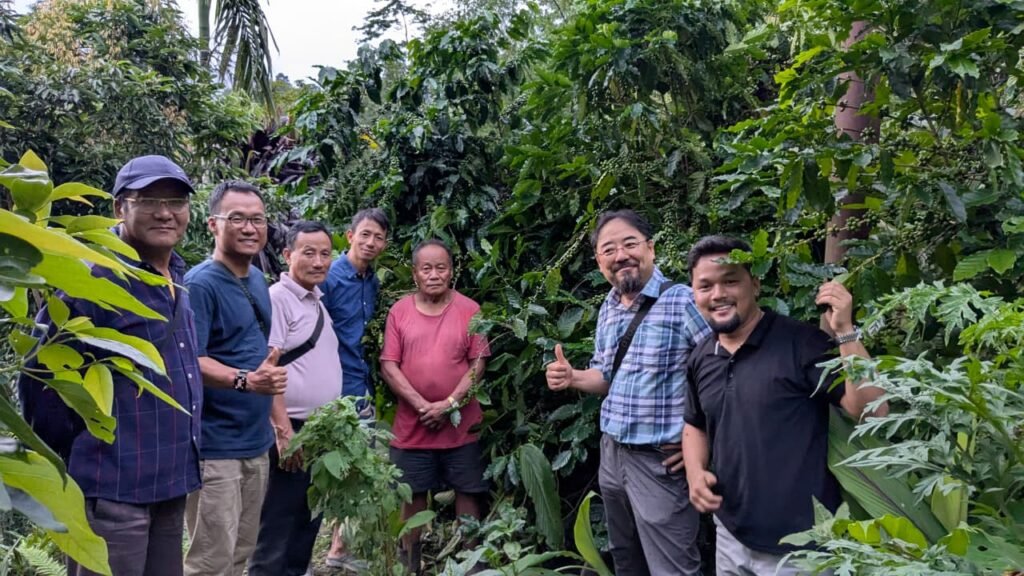
During my visits to mountain villages, I came across something that stayed with me. A family had planted a single coffee tree in front of their house simply because they liked how it looked. During harvest season, they collected approximately 20 kilos of cherries from that one tree.
As I carried those cherries back, I knew there was potential here. Sometimes, a big idea begins with just one tree.
Learning coffee the hard way
The early days came with plenty of surprises, not all of them pleasant.
We once placed a small advertisement in the local newspaper, Himalaya Darpan, hoping to connect with people who had coffee. One respondent took us to his storeroom and showed us one or two kilos of coffee that had been stored for four or five years. The beans were covered in mould and completely unusable.
It was discouraging, but it taught us that coffee quality begins long before roasting.
Even distributing seedlings presented unexpected challenges. Each plant cost just one or two rupees, but transporting them up the hills cost considerably more. We eventually changed our approach and began distributing seeds instead.
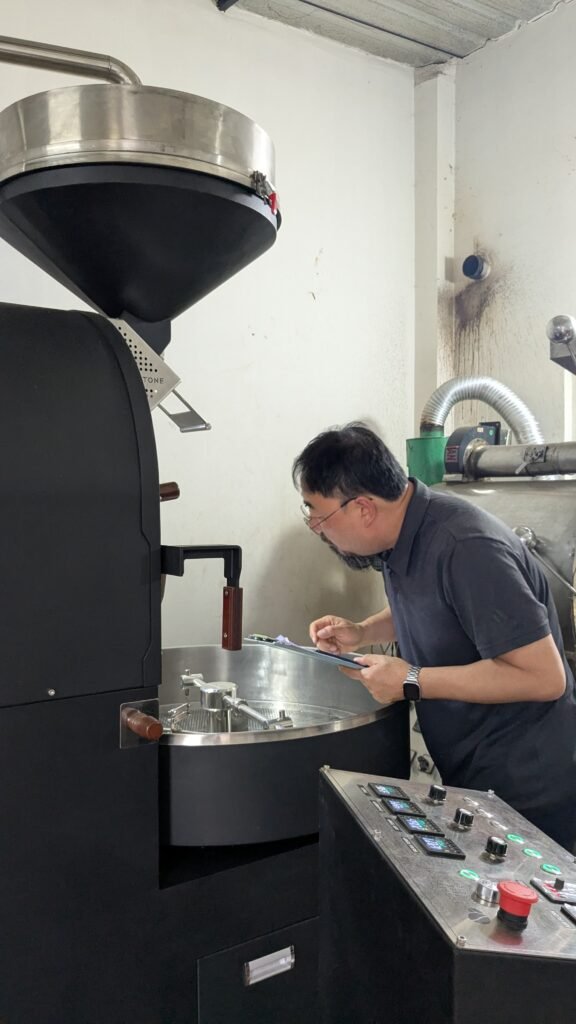
Processing coffee was another challenge. There were no proper coffee machines in the region. My wife and I once stayed up through the night, manually hulling naturally dried cherries to prepare just one or two kilos of green coffee. We sent them to a well-known coffee professional in Korea for roasting.
The response was encouraging: “This is delicious. We want to buy a lot.”
I did not know whether to laugh or cry. We had received an enthusiastic response, but barely had enough coffee to fulfil the demand!
Later, when production reached around 500 kilos of naturally dried cherries, we still couldn’t find a suitable huller. After experimenting with flour mills and other machines, we settled on a rice huller in a nearby village. Even then, nearly half the beans came out broken and had to be sorted by hand.
We thought we were buying coffee. We became a training school.
One of our biggest challenges emerged when we began purchasing coffee cherries from farmers.
We expected baskets of ripe, red cherries. Instead, some farmers brought bags of green cherries because they believed everything growing on the tree was ready for harvesting. Others brought shrivelled, almost black cherries that had dried on the branches. Once, we even found stones mixed into a bag!
As our director, Umesh Gurung, puts it, we thought we were becoming coffee buyers, but we had actually become an unofficial coffee training school.
We explained the importance of harvesting ripe cherries ten times, sometimes twenty times, and kept going. We realised that buying coffee was not enough. We also had to help farmers understand harvesting, quality and the importance of every step in the process.
Even field visits came with surprises. On one collection trip, an encounter with wild bees turned our attention away from coffee quality and towards finding a safe escape route!
Building something beyond a coffee business
Our journey also involved mistakes beyond the Darjeeling hills.
While exploring opportunities to source South Indian coffee, we heard about the coffee grown in villages in the Araku Valley. We decided to purchase some, but the quality turned out to be very poor. We hired local women to sort the defective beans manually, and the additional expense came close to putting the company in serious financial difficulty.
It was another reminder that a promising coffee origin does not automatically guarantee quality.
Today, however, the work has grown far beyond what I imagined during those early visits. Our coffee initiative has been selected by the Kalimpong District administration and the West Bengal state government as a project supporting village communities.
Through a Farmer Producer Organisation (FPO), we now work with approximately 1,000 farmers, training villagers in coffee cultivation and encouraging more families to explore its potential.
For me, this is what makes the journey meaningful. It is no longer just about growing and selling coffee. It is about building an ecosystem where farmers can participate, learn and benefit from the opportunities coffee offers.
A future beyond tea
Every setback has left us with a lesson. The mouldy beans taught us about storage and processing. The expensive seedlings made us rethink distribution. The rice huller taught us to work with available resources. And the farmers taught us that building a coffee business also means investing in education.
Darjeeling has an extraordinary identity built around tea, and I have immense respect for that heritage. But I believe there is room for another story to grow alongside it.
My hope is that one day, when people hear the name Darjeeling, they will think of both tea and coffee.
After all, nature does not recognise the boundaries we draw. Sometimes, we simply need to look beyond them.
About the Author

YoungGyu SEO is a Korean entrepreneur who has been living in India since 2011. He is the founder of CornerStone Coffee, based in Siliguri, West Bengal, with coffee-growing initiatives across the Darjeeling and Kalimpong hills. An SCA Authorised Specialty Trainer, he is also associated with Cornerstone Coffee Roastery, Cornerstone Barista Academy and Café Andante. Through a Farmer Producer Organisation, his company works with approximately 1,000 farmers, alongside initiatives involving the Kalimpong District administration and the West Bengal government.