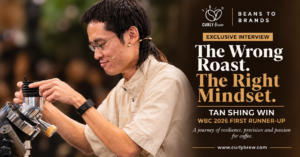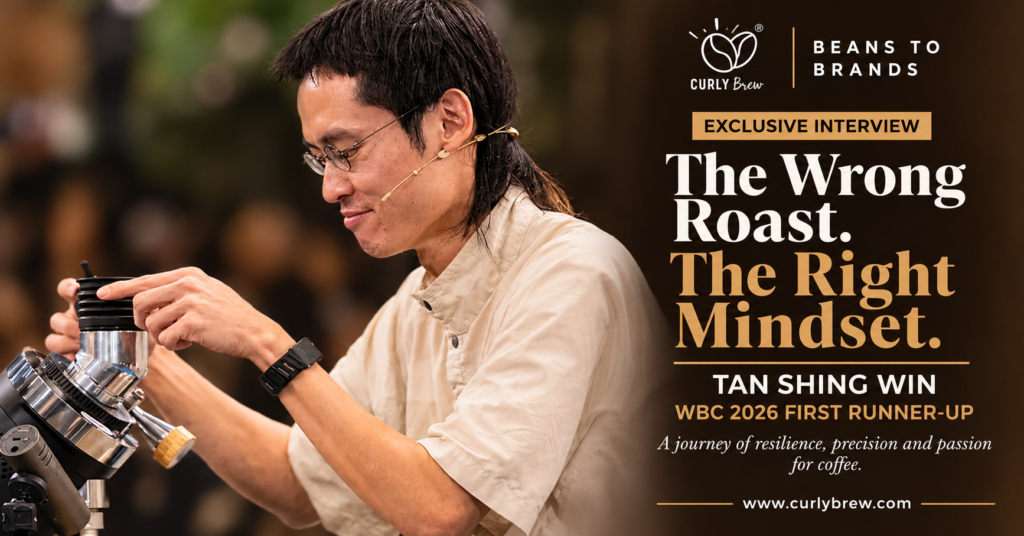
From a part-time university job to becoming the first runner-up at the 2026 World Barista Championship, Tan Shing Win’s journey is shaped by curiosity, collaboration and a deep respect for coffee. In this exclusive conversation with Curly Brew, he opens up about his preparation for Panama, the thinking behind his competition routine, an unexpected semifinal mistake and why he continues to see himself as a learner.
The World Barista Championship is as much about understanding coffee as it is about mastering the craft of presenting it. At the 2026 edition in Panama, Malaysia’s Tan Shing Win secured the first runner-up position, marking a significant milestone in his career and for his country’s specialty coffee community.
But behind the result is a journey that began rather unexpectedly, a competition routine built around moisture, and a philosophy that puts learning ahead of recognition.
We spoke to Tan Shing Win about the experiences, decisions and people that shaped his journey to the world stage.
1. The Beginning: When Coffee Became More Than a Part-Time Job
You started your journey in coffee while studying at university. What first drew you to the industry, and when did you realise this could become a lifelong career? Did you ever imagine competing at the world’s highest level?
I started working in coffee as a part-time job during university, simply to earn some pocket money. What attracted me to the industry was how welcoming everyone was. I met so many passionate people who were constantly sharing knowledge and helping each other improve.
Initially, I never thought I would continue working in coffee after graduation. But after a three-month backpacking trip, I had some time to reflect on what I really wanted to do. That’s when I realised coffee could actually be a lifelong career for me.
As for competition, reaching the highest level has always been a goal. I believed that with the right people and enough dedication, we could eventually get there.
2. The Road to Panama: Three Months of Preparation
The World Barista Championship demands months of preparation, experimentation and precision. What did your journey to WBC 2026 look like? What went into developing your routine, and were there any sacrifices along the way?
We spent about three months preparing for the World Barista Championship, from concept development and routine design to finalising our coffee selection and presentation style.
A large part of that time was spent discussing ideas with my coach and roaster, exploring different approaches before committing to a direction that felt natural to me and reflected how I wanted to present coffee.
I’m naturally a night person, so most of our training happened late at night, sometimes until the early morning. I think my teammates probably made the biggest sacrifice by having to follow my schedule!
3. The Coffee Behind the Performance: A Washed Geisha from Panama
Every championship performance has a coffee at its heart. Tell us about the coffee you selected for your 2026 routine. What made it special, and why did you decide to use the same coffee across all three beverage courses?
My competition coffee was a washed Geisha from Finca El Pergamino in Panama, with delicate floral, citrus, and stone fruit characteristics.
Interestingly, we weren’t initially looking for a washed coffee. We happened to roast and taste this particular lot, and it really surprised us with how special it was.
Using a washed Geisha across all three courses isn’t a common approach in competition, especially for the milk beverage. We definitely had some doubts at first, but rather than focusing on the limitations, we decided to challenge ourselves to find the best expression of this coffee in all three beverages.
4. Beyond the Cup: The Idea That Shaped His Championship Routine
Your competition routine explored moisture, a factor that is often overlooked in coffee. What inspired this concept, and what did you want the judges to understand through your 15-minute presentation?
I believe the role of a modern barista has evolved beyond working behind the coffee bar. Today, we’re involved in different parts of the coffee supply chain, from visiting farms and sourcing coffee to roasting, brewing, and attending international coffee events.
Working across these different environments has made me realise that being a modern barista requires more than just technical skills. We need to understand the factors that influence coffee so we can make better decisions wherever we work.
That’s what led me to explore moisture, an often overlooked factor that influences coffee throughout its journey.
Through my three beverage courses, I wanted to demonstrate how moisture can protect, support, and transform coffee. Ultimately, my message was about how the modern barista can use a deeper understanding of coffee to preserve its quality, adapt to different conditions, and explore new possibilities.
5. When Things Didn’t Go as Planned: A Semifinal Setback
Competition stages are unpredictable, even with months of preparation. Was there a moment during WBC 2026 when things didn’t go according to plan? How did you manage the pressure and recover?
Before stepping onto the stage, I reminded myself to trust the preparation, my coach, and the team behind me. We had done everything we could, and all that was left was to give my best performance.
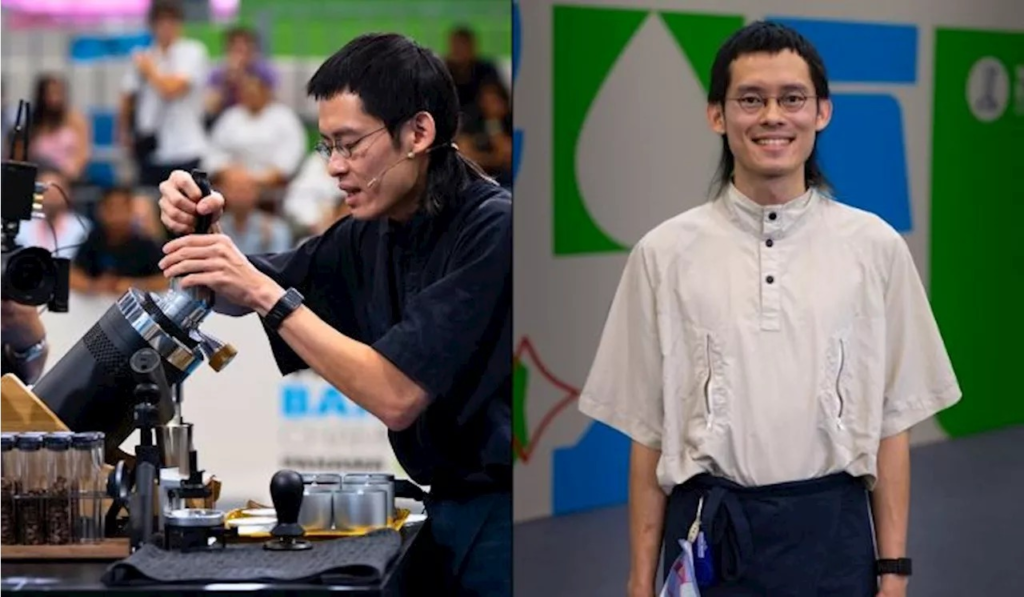
During the semifinal round, I actually made a huge mistake by grinding coffee from the wrong roast profile. I was shocked and panicked for a moment, but quickly reminded myself to stay calm, recover, and continue with the routine.
Of course, I was worried about how much it might affect the cup quality. A lot of possibilities went through my mind, including the possibility that it might not make much difference at all.
But at that moment, I realised there was nothing I could do to change what had happened. I had to accept the mistake, stop overthinking, and focus on what I could still control.
6. First Runner-Up at the World Barista Championship: A Moment of Pride and Mixed Emotions
You finished as the first runner-up at your debut World Barista Championship. What went through your mind when the results were announced? Looking back, is there anything you would have done differently?
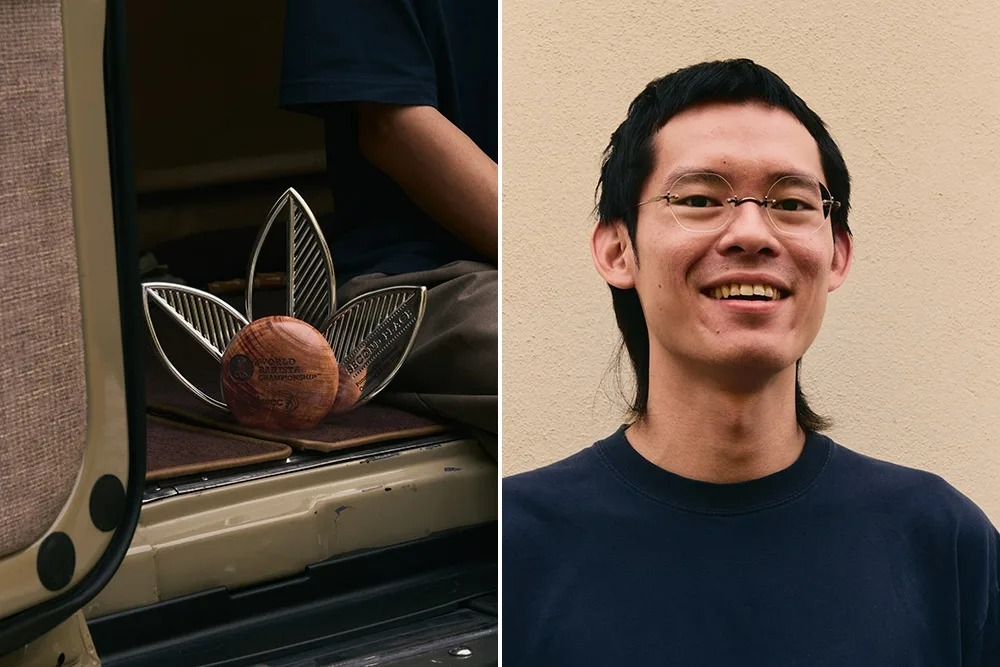
It was definitely a bittersweet moment, a mixture of happiness and disappointment. I was incredibly proud to have finished second in my first World Barista Championship, but at the same time, knowing we were so close to winning made it difficult to describe exactly how I felt.
What makes this achievement especially meaningful is knowing how much it means to One Half, Tri-Up, and everyone who has been part of our competition journey over the years. We’ve worked towards this for a long time, and seeing that effort come together on the world stage means a lot.
We gave everything we had and presented what we genuinely believed was our best work. And knowing that we gave our very best, I don’t think there’s anything I would have done differently.
7. Beyond Competitions: Learning from Every Part of the Coffee Chain
Your work extends beyond the competition stage, including green coffee sourcing and trading. How has working across different parts of the coffee value chain changed the way you understand and approach an exceptional cup of coffee?
I think I’m more of a quiet learner. I travel a lot and work across different parts of the coffee supply chain, from visiting producers and sourcing green coffee to roasting and brewing.
I don’t necessarily see myself as a creator or inventor. I learn by observing, listening, and absorbing knowledge from the people and experiences around me, then gradually developing my own perspective on coffee.
Working directly with producers has changed how I approach roasting and brewing. I’ve learned to appreciate the effort and decisions that go into producing a coffee, and I see my role as understanding and preserving those qualities rather than trying to create something entirely new.
For me, making exceptional coffee is about respecting the work that has already been done and bringing out the best of what the coffee has to offer.
8. Malaysia on the World Coffee Map: A Year to Remember
Your achievement came during an exceptional year for Malaysian coffee, with international recognition across multiple championships. What does this mean for the country’s specialty coffee community, and what message would you like young Malaysian baristas to take away from it?
I’ve seen how much Malaysia’s coffee community has evolved over the years. In my opinion, the standard of cafés and the overall quality of coffee have reached a very high level.
I think 2026 has been an incredible year for Malaysian coffee. Jacky finished as the first runner-up at the World Latte Art Championship, Nas became the World Brewers Cup Champion, and I finished as the first runner-up at the World Barista Championship.
These achievements have brought more international attention to Malaysia’s specialty coffee scene, and I believe the entire community benefits from that recognition.
More importantly, I hope these results encourage the younger generation to dream bigger. We’ve proven that Malaysians are capable of achieving results at the highest level. What once seemed like a distant dream now feels much more achievable, and I hope that inspires more people to pursue their own journey in coffee.
9. The Person Behind the Barista: Staying Curious
Beyond competitions, what does everyday life look like for you? After achieving such a significant milestone, what continues to keep you curious about coffee and motivated to learn?
Even when I’m not preparing for competition, coffee is still a big part of my everyday life.
I’m constantly involved in different areas of our coffee business, whether it’s sourcing green coffee, roasting, brewing at the bar, or attending international coffee events.
I think having the opportunity to work across so many different areas is what keeps me curious. There’s always something new to discover, whether it’s a different coffee, a new perspective from someone I meet, or simply finding a better way to do something we’ve been doing for years.
Finishing second at WBC doesn’t change that. I still see myself as a learner, and there’s so much more I want to understand about coffee.
10. What’s Next for Tan Shing Win? Finding the Next Story to Tell
After standing on the world’s biggest barista stage and finishing as the first runner-up, what’s next? Do you see yourself returning to competition, mentoring upcoming baristas, or exploring new opportunities within the coffee industry?
I think I’ll still be doing what I’ve always been doing, working, learning, and trying to make the best coffee I possibly can.
As for competing again, I don’t have any plans at the moment. I think I’ll take some time to look for new inspiration or an idea that I genuinely believe is worth sharing. For me, having something meaningful to communicate has always been an important reason to compete.
At the same time, I do feel a greater sense of responsibility towards the coffee community after this experience. I’ve received so much support and knowledge throughout my journey, and I hope I can continue sharing what I’ve learned, supporting younger baristas, and inspiring the next generation to believe they can achieve something on the world stage too.
A Journey That Continues Beyond the Podium
For Tan Shing Win, finishing as the first runner-up at the World Barista Championship is not a destination. It is another chapter in a career built around curiosity, collaboration and continuous learning.
From an unexpected beginning in coffee to exploring the science of moisture on the world stage, his journey reflects how much the role of a barista has evolved.
And perhaps his most important takeaway is also his simplest: there is always more to learn, and there is always a better way to understand the coffee in front of you.
About Tan Shing Win
Tan Shing Win is a Malaysian barista and the first runner-up at the 2026 World Barista Championship. He is part of One Half Coffee Roastery and Tri-Up Coffee, where his work takes him across different areas of the coffee industry, from visiting producers and sourcing green coffee to roasting and brewing. These experiences have given him opportunities to learn from different people, cultures and approaches to coffee, continuing to shape the way he works today.
Follow Tan Shing Win: @shing_win
Acknowledgements
A championship journey is never a solo effort. Tan Shing Win’s journey to the World Barista Championship was supported by a team whose knowledge, collaboration and contributions helped bring his ideas to the world stage.
Coach: Keith Koay — @keith_koay / @seventeenmarch
Roaster: Erik Liao — @erik_liao95
Company: One Half Coffee Roastery — @onehalfroastery
Green Coffee Partner: Tri-Up Coffee — @triupcoffee / @triupcoffee_sea
Photography Credit
World Coffee Championships (WCC), where applicable.
A Curly Brew Feature
Curly Brew | Beans to Brands
Stay Connected with Curly Brew
Love coffee stories? Follow Curly Brew for more inspiring coffee journeys, expert conversations and stories from across the coffee world.
Follow us: @curlybreww
Website: www.curlybrew.com