What Makes a Great Roast Beyond the Roast Profile?
By Anup Singh | Head of Coffee, GB Roasters
A roast profile is often treated as a recipe for predicting how a batch of coffee will taste. Heat, time, airflow and the roast curve certainly shape the outcome. But a great roast is about more than following a profile. The profile is a tool, not a guarantee of quality.
Consistency Starts Before the Profile
A target curve alone cannot guarantee quality. Great roasting begins much earlier, with the selection and handling of green coffee beans.
Even within the same origin, coffees vary in grade and quality. For example, coffee from Ethiopia does not automatically guarantee a particular quality level. Ethiopian coffees are classified into different grades, such as G1, G2 till G5, and choosing the right grade is an important step towards achieving a great roast.
Even within the same declared grade, beans can vary depending on the farm or washing and processing station where the coffee cherries are processed into green beans. These differences influence how the coffee responds to roasting and whether it reaches the intended flavour profile.
The principle is simple: garbage in, garbage out.
A roaster’s job is to understand these variables and prepare accordingly. Responding to variation does not always mean abandoning the roast profile. It means applying it with judgement and calibrating the roast so the beans undergo the intended transformation.
The Roast Profile Is a Blueprint, Not a Guarantee
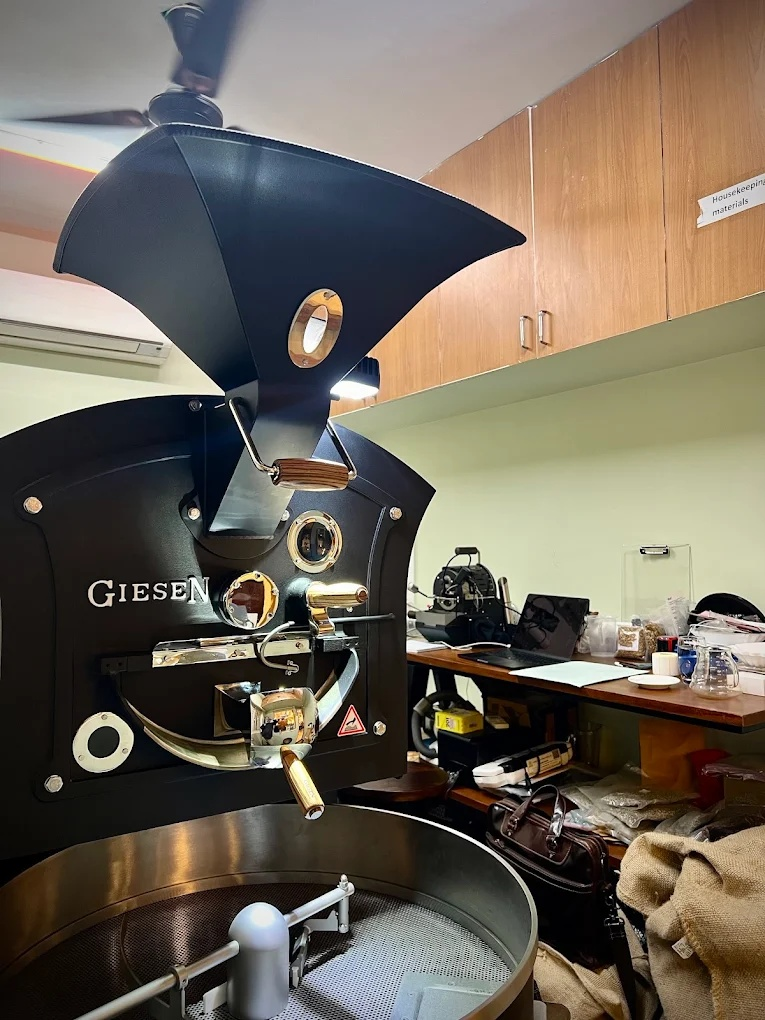
Roast profiles are built around specific machines and their operating conditions. Even machines from the same brand can behave differently. A profile developed by a roastery in Bengaluru may not deliver the same results when used by a roaster in Mumbai.
The flavour in the cup is influenced by the chemical transformations that take place inside the beans, as well as the geographic and environmental conditions in which roasting occurs.
Two coffees roasted using the same profile can behave differently when thermal or environmental conditions change. Ambient temperature, humidity, gas pressure stability, drum condition and airflow can all influence how heat behaves during a roast.
This is why great roasters do not simply follow a profile blindly. They use it as a baseline and monitor the roast in real time. That means paying attention not only to temperatures, but also to the sounds of the roast, pressure behaviour and changes in bean colour.
Small adjustments to airflow or heat can help maintain even development while respecting the overall direction of the roast.
Protecting Freshness After Roasting
A roast that tastes great on day one but quickly loses its character is not fully living up to its potential. Roast quality extends beyond the roasting drum.
Cooling, degassing and packaging timelines all influence how coffee performs after roasting. If cooling is too slow, the coffee may continue developing unwanted characteristics. If packaging is poorly timed, trapped gases can affect how the coffee matures. Inconsistent valves, seals and storage practices can also accelerate the loss of aroma.
Great roasting therefore includes a plan for what happens after the roast: how quickly the beans are cooled, how long they rest and how they are protected from oxygen, light and humidity.
Even the best roast profile cannot compensate for coffee that is mishandled after roasting.
Quality Control Must Be Sensory and Systematic
Cupping is an essential part of quality control, but it should never be guesswork.
Great roasters establish feedback loops through consistent sample-roasting schedules, standardised preparation methods and clear evaluation criteria. They track results and connect flavour outcomes with roasting adjustments.
This is how a roaster moves from saying, “This tastes better,” to understanding why it tastes better.
An effective quality-control culture also encourages learning. If a batch tastes dull, harsh or lacks clarity, the roaster investigates what may have changed. This could include green coffee moisture, drum temperature behaviour, airflow response, batch size, cooling parameters or even the grinder and brewing variables used during evaluation.
The roast profile is part of the story, but it is not the only chapter.
Great Roasts Show Up in the Cup
A recipe can get you close, but a roaster’s awareness of variation is what helps create a consistently remarkable cup. Ultimately, what makes a great roast is not just the profile; it is everything that surrounds it. The proof is in the brew.
At GB Roasters, we treat the roast profile as a starting point. The craft lies in the decisions, the monitoring, the adjustments and the relentless pursuit of flavour and marginal improvements with every roast.
Because when roasting is approached with awareness, the curve becomes more than a set of numbers. It becomes a cup worth returning to.
About the Expert

Anup Singh leads coffee at GB Roasters. He is a Q-Grader, a CQI-accredited Q Processing Professional and a lecturer in Coffee Quality and Processing. His journey began in a garage micro-roastery in Jakarta. Anup has served as a national and international jury member at Brewers and Roasting National Championships. Outside coffee, he builds custom motorcycles and enjoys trekking, pursuits fuelled by the same adventurous spirit he brings to coffee.