The coffee industry is quietly changing.
For decades, cafés competed on products. Better beans. Better machines. Better brewing methods. Today, that is no longer enough. Consumers can buy specialty coffee almost anywhere — online subscriptions, quick commerce apps, micro-roasters, supermarkets, even luxury instant coffee brands.
So what makes people step out and choose one café, one coffee brand, or one experience over another?
The answer is no longer just coffee.
It is an emotional experience.
The Global Coffee Economy Is Shifting Toward Experience
The global coffee market is expected to cross $500 billion in the coming years, according to Statista and industry reports. Yet one of the biggest growth drivers is not bean consumption alone. It is an experiential coffee culture.
Consumers today spend on:
- café aesthetics
- origin storytelling
- coffee workshops
- brewing rituals
- community events
- coffee tourism
- lifestyle association
This shift is particularly strong among millennials and Gen Z consumers.
A report by Eventbrite found that over 75% of millennials prefer spending money on experiences over physical products. That mindset is now deeply influencing coffee culture.
People do not simply want caffeine.
They want identity, belonging, and emotion attached to the cup.
Coffee Has Become a Lifestyle Signal
Coffee was once transactional.
Today, it is performative, emotional, and cultural.
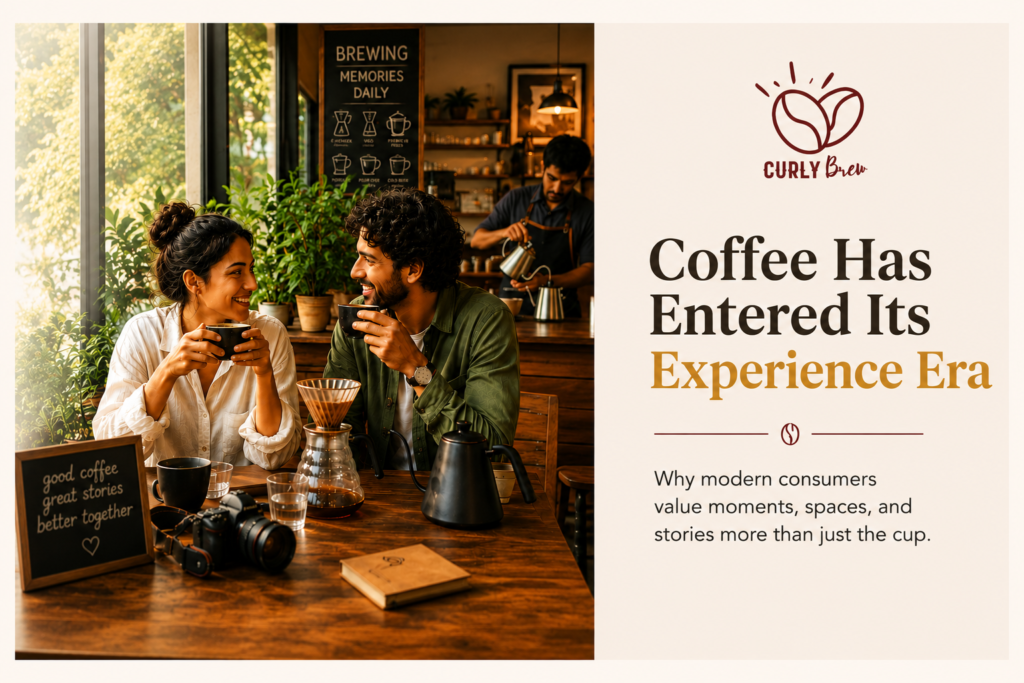
A café is no longer just a beverage outlet. It has become:
- a workspace
- a dating space
- a creative studio
- a networking zone
- a content backdrop
- a solitude space
This is why modern cafés invest heavily in:
- architecture
- playlists
- lighting
- sensory branding
- storytelling
- customer interaction
In many urban cities, especially places like Bengaluru, Mumbai, and Delhi, people often choose cafés based on “vibe compatibility” before menu pricing.
The coffee itself matters.
But the emotional environment matters more.
The Instagram Effect Changed Café Economics
Social media fundamentally altered coffee consumption.
Instagram transformed cafés into visual experiences. Pinterest romanticized slow mornings. TikTok accelerated trend-based café culture.
Today, consumers document:
- latte art
- brewing rituals
- café interiors
- coffee travel
- “day in my life” coffee moments
Coffee became a shareable culture.
This directly impacts business performance. Research published by Forbes and hospitality analysts consistently show that visually distinctive cafés generate stronger customer retention and organic social reach.
In simple terms:
People market coffee experiences for free through content.
Experience Creates Memory. Products Create Consumption.
Most consumers cannot recall the exact coffee beans they drank two weeks ago.
But they remember:
- the café where they had a breakup conversation
- the coffee estate where they watched sunrise
- the rainy evening with jazz music playing
- the barista who explained processing methods
- the quiet corner where they finished a manuscript
This is the psychology of emotional memory.
Neuroscience research has repeatedly shown that emotional experiences strengthen long-term memory retention far more effectively than routine consumption.
The coffee becomes secondary.
The feeling becomes permanent.
The Rise of Coffee Tourism
One of the clearest signs of this shift is coffee tourism.
Regions like Coorg and Chikmagalur are increasingly attracting travelers seeking:
- plantation stays
- cupping experiences
- farm walks
- brewing sessions
- direct interaction with growers
Globally, countries like Colombia and Ethiopia have already positioned coffee as cultural tourism.
Consumers today want transparency and participation.
They want to know:
Who grew this coffee?
What altitude was it grown at?
What story exists behind this cup?
The modern consumer values narrative almost as much as flavor.
Independent Cafés Understand This Better Than Chains
Large coffee chains built scale.
Independent cafés are building emotional loyalty.
Smaller cafés often succeed because they create:
- intimacy
- familiarity
- community
- personalization
Customers return because someone remembers their order, their preferred corner seat, or even their mood.
That emotional familiarity cannot be mass-produced easily.
This is why some independent cafés with average marketing budgets develop cult-like communities online and offline.
The Future of Coffee Is Human-Centered
The next phase of coffee culture will belong to brands that understand human behavior, not just beverage quality.
Consumers are increasingly seeking:
- slower experiences
- meaningful spaces
- sensory comfort
- emotional belonging
- offline connection
In an overstimulated digital world, coffee spaces are becoming emotional shelters.
Perhaps that is why people continue paying premium prices for café experiences even when coffee can be made cheaper at home.
They are not only buying coffee anymore.
They are buying an atmosphere.
Pause.
Identity.
Conversation.
Presence.
And in many ways, that may be the most important evolution modern coffee culture has seen.