10 Barista Mistakes Every Beginner Should Avoid
A Beginner’s Guide to Building Confidence Behind the Espresso Machine
Becoming a barista is about much more than making coffee. It requires precision, consistency, customer service, and continuous learning. While every experienced barista was once a beginner, the difference lies in learning from mistakes early.
The global coffee market is expected to exceed US$ 166 billion by 2029, while specialty coffee continues to grow as consumers seek better quality and unique experiences. This means cafés are looking for skilled professionals who can deliver consistency—not just creativity.
If you’re starting your journey behind the coffee bar, here are the ten most common mistakes first-time baristas make—and practical ways to avoid them.
Source: Mordor Intelligence, Global Coffee Market Report (2024).
1. Treating Every Coffee Bean the Same
One of the biggest beginner mistakes is assuming every coffee behaves identically.
Different coffee origins, roast levels, and processing methods require slight adjustments in brewing. A medium-roasted washed coffee may extract differently from a naturally processed coffee, even using the same settings.
How to avoid it:
Learn about coffee origins, roast profiles, and freshness. Taste different coffees regularly to understand how they vary.
2. Ignoring Grinder Adjustments
Even the best espresso machine cannot compensate for an incorrectly adjusted grinder.
Temperature, humidity, and the age of coffee beans affect how quickly water flows through coffee. Using yesterday’s grinder setting may result in bitter or sour espresso today.
How to avoid it:
Check your espresso regularly and adjust the grind whenever extraction changes.
3. Focusing Only on Latte Art
Social media has made latte art the symbol of a skilled barista. In reality, beautiful designs mean very little if the espresso underneath is poorly extracted.
A balanced coffee should always come before an attractive pattern.
How to avoid it:
Master espresso extraction and milk texturing before spending hours practising advanced latte art.
4. Forgetting to Taste the Coffee
Many beginners prepare beverages without tasting them.
Professional baristas frequently taste espresso to ensure consistency. If you don’t taste your coffee, you’ll never know whether it needs improvement.
How to avoid it:
Develop the habit of tasting espresso throughout the day. It helps you identify changes before customers do.
5. Poor Equipment Cleaning
Coffee oils build up quickly inside espresso machines, grinders, and steam wands. Dirty equipment affects flavour and shortens the life of expensive machines.
According to leading espresso machine manufacturers, daily cleaning is essential for maintaining both hygiene and extraction quality.
How to avoid it:
Follow a strict cleaning routine after every shift and perform regular backflushing and grinder maintenance.
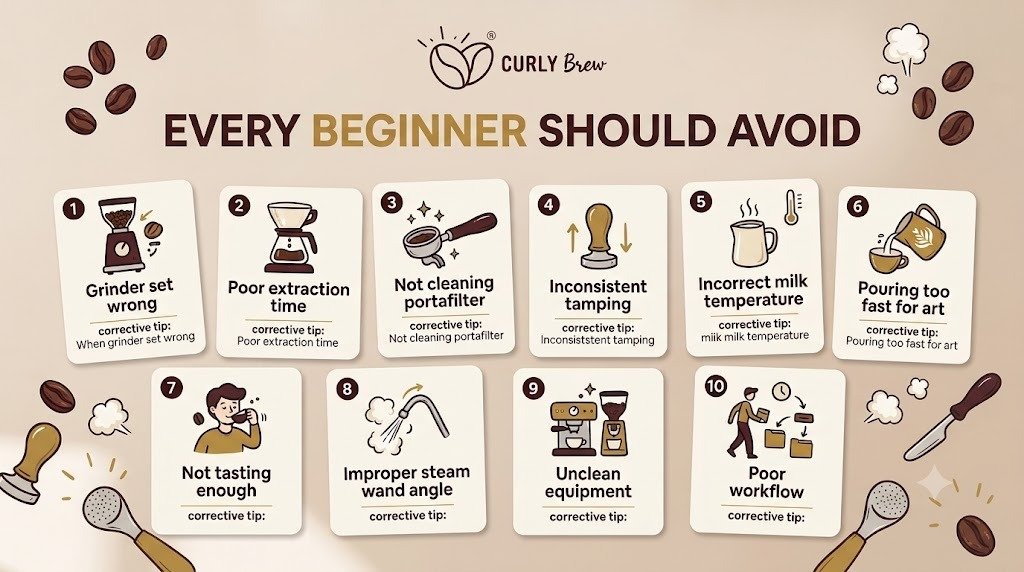
6. Steaming Milk Incorrectly
Overheated milk loses its natural sweetness and creates large bubbles instead of smooth microfoam.
For milk-based drinks, texture is just as important as temperature.
How to avoid it:
Steam milk to approximately 55–65°C, creating a silky texture rather than thick foam. Always use a thermometer while learning.
7. Working Too Fast Too Soon
Speed comes with experience.
Many new baristas rush through orders and accidentally compromise quality by using incorrect doses, inconsistent tamping, or poor workflow.
How to avoid it:
Prioritise accuracy first. Once your technique becomes consistent, speed will naturally improve.
8. Not Communicating with Customers
A barista’s job is not limited to making coffee.
Customers often appreciate simple recommendations or explanations about different brewing methods and coffee origins. According to PwC’s Future of Customer Experience Survey, 73% of consumers consider customer experience a key factor when choosing where to spend their money.
How to avoid it:
Smile, listen carefully, answer questions confidently, and recommend drinks based on customer preferences.
Source: PwC – Future of Customer Experience Survey.
9. Being Afraid to Ask Questions
Many beginners hesitate to ask for help because they fear appearing inexperienced.
In reality, asking questions is one of the fastest ways to improve.
How to avoid it:
Seek feedback from senior baristas, attend coffee workshops, and participate in cupping sessions whenever possible.
10. Thinking Learning Ends After Training
Coffee is one of the fastest-evolving industries.
New processing methods, brewing techniques, sustainability practices, and café trends continue to emerge every year. The best baristas remain lifelong learners.
How to avoid it:
Read coffee publications, attend coffee festivals, participate in certification programs, and keep practising.
Final Thoughts
Every professional barista has made mistakes. What sets successful coffee professionals apart is their willingness to learn, adapt, and improve every single day.
Remember, customers may forget the latte art, but they will always remember how the coffee tasted and how they were treated.
The journey from beginner to professional doesn’t happen overnight. It happens one well-made cup at a time.







What should I focus on first — tamping, extraction time, or milk texturing?
First, you need learn to dial in your espresso—grind size, dose, and extraction. Then focus on consistent tamping, followed by milk texturing once your espresso fundamentals are solid. Master the basics first, then build your latte skills. Good Luck!
How do I know if my coffee grind size is right?
Too fast + sour? → Grind finer.
Too slow + bitter? → Grind coarser.
Balanced flow + taste? → You’re on the right track!
💡 Barista tip: Make small adjustments and let taste guide you, not just extraction time.