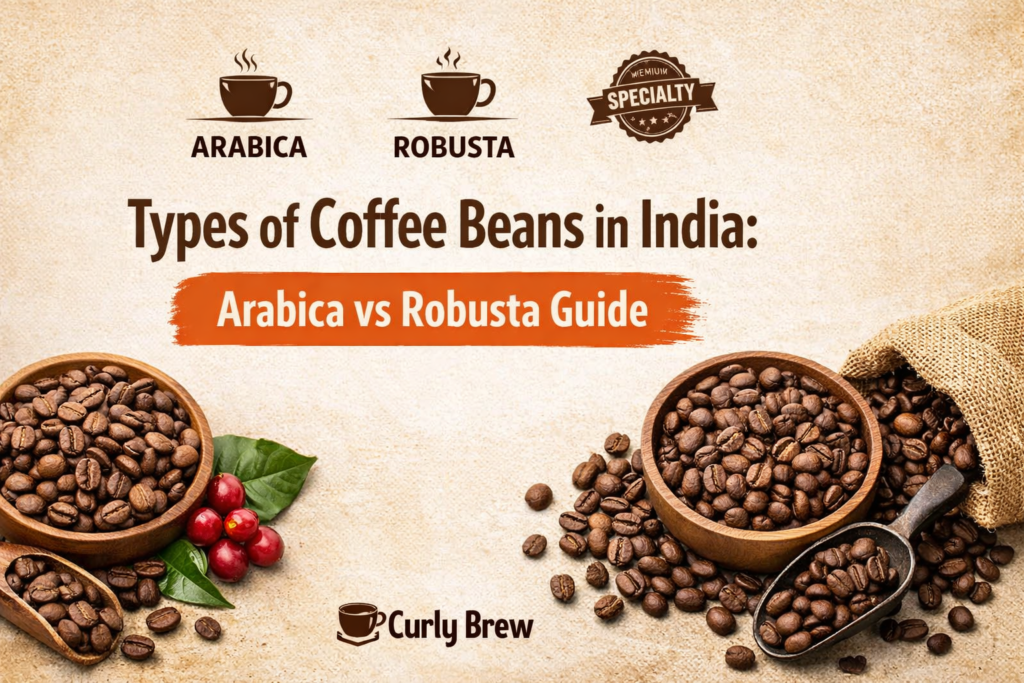
India is the world’s seventh-largest coffee producer and fifth-largest exporter, with annual production expected to cross 4 lakh tonnes in 2025-26. Nearly 70% of Indian coffee is exported, but the domestic coffee culture is growing rapidly, especially around specialty cafés, artisanal roasters, and origin-led coffees.Coffee grows mainly in the Western Ghats.
Key coffee-growing states:
- Karnataka (largest producer)
- Kerala
- Tamil Nadu
India is unique because:
- Coffee is mostly shade-grown
- It is often handpicked
- It supports biodiversity
👉 This results in smooth, balanced flavors.
☕ 1. Arabica Coffee Beans
Arabica is the most popular coffee variety in India.
Key characteristics:
- Smooth and mild taste
- Higher acidity
- Complex flavors (fruity, floral, nutty)
- Lower caffeine content
Growing conditions:
- Higher altitude (900–1600 meters)
- Cooler climate
- Requires more care
Indian Arabica regions:
- Chikmagalur
- Coorg
- Baba Budangiri
Flavor profile:
Expect notes like:
- Chocolate
- Citrus
- Caramel
Arabica makes up 60–70% of specialty coffee globally.
2. Robusta Coffee Beans
Robusta is stronger and more resilient.
Key characteristics:
- Bold and bitter taste
- High caffeine content
- Low acidity
- Heavy body
Growing conditions:
- Lower altitude
- Warmer climate
- More resistant to pests
Indian Robusta regions:
- Wayanad
- Coorg
- Nilgiris
Flavor profile:
- Earthy
- Woody
- Nutty
Robusta is often used in:
- Espresso blends
- Instant coffee
3. Specialty Coffee in India
Specialty coffee is not a different species. It is a quality classification.
What defines specialty coffee?
A coffee is “specialty” if it:
- Scores 80+ on a 100-point scale
- Has no major defects
- Is traceable to origin
Why it matters:
- Better quality beans
- Ethical sourcing
- Transparent supply chain
Specialty coffee in India is growing fast:
- Rise of boutique roasters
- Increasing café culture
- Educated consumers
👉 India’s specialty coffee market is expected to grow steadily as urban demand rises.
🔍 Arabica vs Robusta vs Specialty Coffee: Key Differences
| Feature | Arabica | Robusta | Specialty Coffee |
| Taste | Smooth, complex | Strong, bitter | Clean, refined |
| Caffeine | Low | High | Depends (mostly Arabica) |
| Price | Higher | Lower | Premium |
| Quality | High | Moderate | Highest |
| Usage | Premium coffee | Instant & blends | Craft coffee |
Specialty coffee often uses high-grade Arabica beans.
🌍 Indian Coffee Varieties You Should Know
India offers unique coffee varieties.
Popular ones:
- Kent – One of the oldest Arabica varieties
- S795 – Balanced and widely grown
- SL9 / SLN9 – High-quality hybrid
- Cauvery – Known for yield and quality
👉 These varieties shape India’s coffee identity.
📊 Coffee Consumption Trends in India
- India consumes over 1.2 million bags annually
- Urban café culture is rising rapidly
- Young consumers prefer:
- Specialty coffee
- Manual brewing
- Origin-based coffee
👉 The shift is from quantity to quality
How to Choose the Right Coffee Bean
Choose based on your taste:
If you like:
- Smooth, fruity coffee → Go for Arabica
- Strong, bold coffee → Choose Robusta
- Premium experience → Try Specialty coffee
Brewing Tip
The bean type also affects brewing:
- Arabica → Best for pour-over, AeroPress
- Robusta → Great for espresso
- Specialty → Ideal for manual brewing
The Future of Coffee Beans in India
India is moving toward:
- Specialty coffee growth
- Direct trade models
- Story-driven coffee branding
Consumers now care about:
- Origin
- Farmer stories
- Brewing experience
👉 Coffee is no longer just a drink. It is a lifestyle.
Final Sip
Understanding the types of coffee beans in India helps you make better choices.
- Arabica offers complexity
- Robusta delivers strength
- Specialty coffee brings excellence
As India’s coffee culture evolves, awareness is key.
Behind every bean is a story—of soil, skill, and passion.
If you want to explore more about Indian coffee, culture, and storytelling, follow @curlybreww for your daily dose of all things coffee.





A simplified explanation to indian coffee varieties for a novice coffee enthusiast.
I have seen people getting confused with the basic terms arabica and robosta.
Coffee in india is booming and people are open for more info and education regarding what they are consuming and want to upgrade there coffee game.
Such more article and workshops are needed to market indian coffee with in India
India is a big market for any product and a quality producer for good and premium coffees even then most people are consuming sub standard coffee due to lack of knowledge regarding the same.
Thanks for the info and will wait for further more articles regarding the indian coffee
Thank you so much for your thoughtful comment. You are absolutely right — many people are still confused about Arabica and Robusta, which is why coffee education is so important.
India produces amazing coffee, but lack of awareness often leads people to consume lower-quality options. We are glad you found the article helpful, and we will definitely keep sharing more simple, educational content on Indian coffee.